
Health
The strongest weight-loss drug yet
In a trial of 2,339 adults with obesity, the top dose of retatrutide, a weekly shot that copies three gut hormones, cut body weight by 25% on average over 80 weeks, against 3.9% on placebo.
A new weekly injection helped people with obesity lose a quarter of their body weight on average, in a trial now published in the New England Journal of Medicine. The drug, retatrutide from Eli Lilly, produced some of the largest weight loss yet seen from a medicine.
What the trial did
The phase 3 trial, called TRIUMPH-1, enrolled 2,339 adults with obesity who did not have diabetes. They were randomly assigned to a weekly injection of retatrutide at 4, 9 or 12 milligrams, or to a placebo, for 80 weeks. The dose was raised gradually, every four weeks, from a 2 mg start.
How it works
Today’s obesity shots copy gut hormones that tell the brain you’ve eaten. Semaglutide (sold as Wegovy and Ozempic) copies one, GLP-1. Tirzepatide (Zepbound and Mounjaro) copies two, GLP-1 and GIP. Retatrutide is the first to reach phase 3 that copies three: GLP-1, GIP and glucagon, as Scientific American explains.
 One hormone signal, two, or three.
The results
After 80 weeks, average weight loss was 17.6% on 4 mg, 23.7% on 9 mg and 25.0% on 12 mg, against 3.9% on placebo. For someone who started at 100 kilograms, a 25% loss means about 25 kilograms. Among participants with a starting BMI of 35 or more who stayed on the drug for two years, weight loss reached up to 30%. The trial also found less knee pain in people with knee osteoarthritis, and fewer breathing interruptions in people with sleep apnoea.
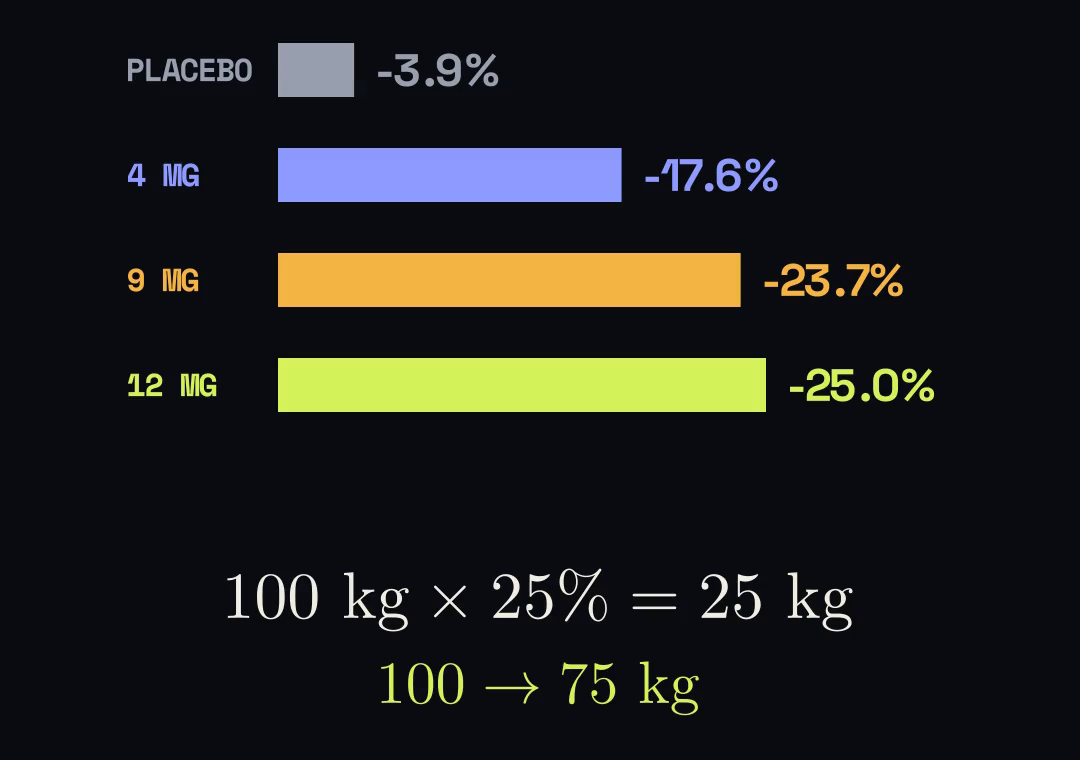 Average weight loss by dose after 80 weeks.
The side effects
The side effects are the familiar ones for this class of drug, and more common at higher doses. On the top dose, 42% of participants had nausea, 32% diarrhoea, 26% constipation and 25% vomiting. About 11% of people on 12 mg stopped because of side effects, compared with about 5% on placebo.
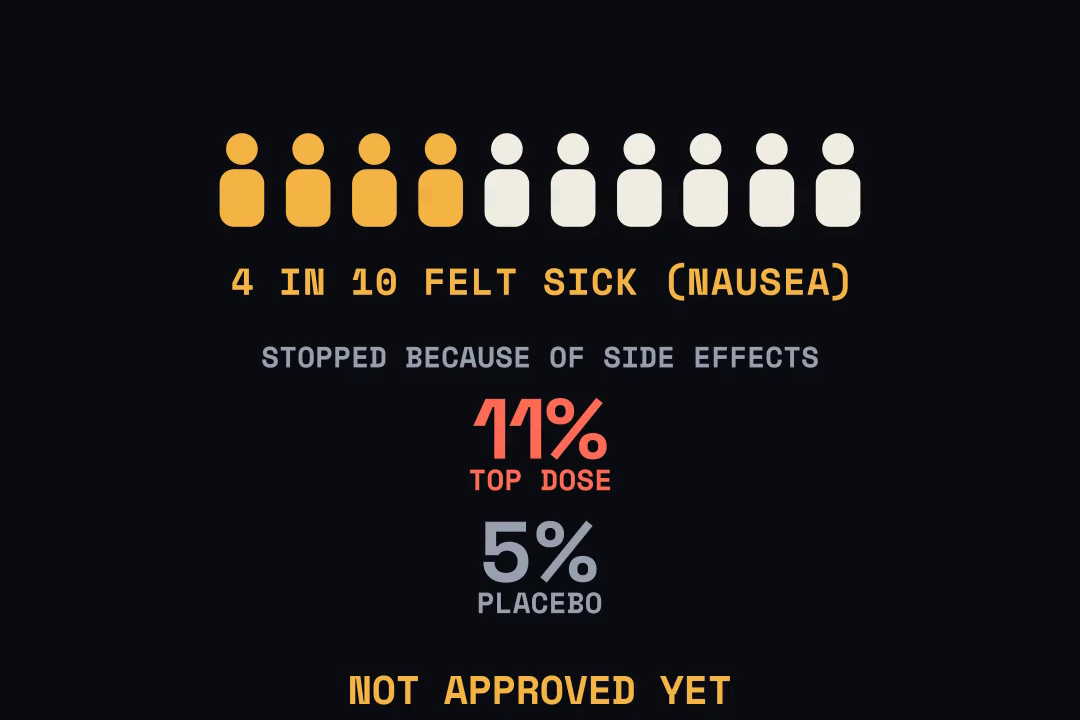 The trade-off at the top dose.
Why it matters
Obesity raises the risk of diabetes, heart disease and joint problems, and the drugs that treat it keep getting stronger. A three-hormone drug reaching an average of 25% raises the bar for what a medicine can do, as long as people can tolerate it.
Retatrutide is still investigational and isn’t approved anywhere. The trial was funded by its maker, Eli Lilly. The two-year figure applies to a subgroup who stayed on the top dose, and nausea and other stomach side effects were common.
Copying three hunger hormones instead of one or two produced some of the biggest weight loss yet seen from a drug.
Sources
- Retatrutide, a Triple Hormone Receptor Agonist, for Treatment of Obesity, Jastreboff et al., New England Journal of Medicine (29 Sep 2026) (details checked via Crossref; the journal page was not reachable from our tools)
- Phase III retatrutide study demonstrates 30% weight loss, The Pharmaceutical Journal (trial figures, side effects and discontinuations)
- Blockbuster retatrutide trial signals a 'new high-water mark' for weight-loss drugs, Scientific American (29 Sep 2026) (how it compares with semaglutide and tirzepatide)